
The 4WEB Difference
Therapeutic by Design™. Built around how your body heals.
Why Truss Implant Technology™
Think about a snowshoe. Walk through snow in regular boots, and you sink — all your weight pressing into one small point. A snowshoe spreads that same weight over a wider area, so you stay on top instead of sinking in.
Our implant works on a related principle, aimed at a different goal. Instead of spreading force to avoid pressure, it’s engineered to deliver just the right amount of pressure, in just the right places, to help your bone heal.

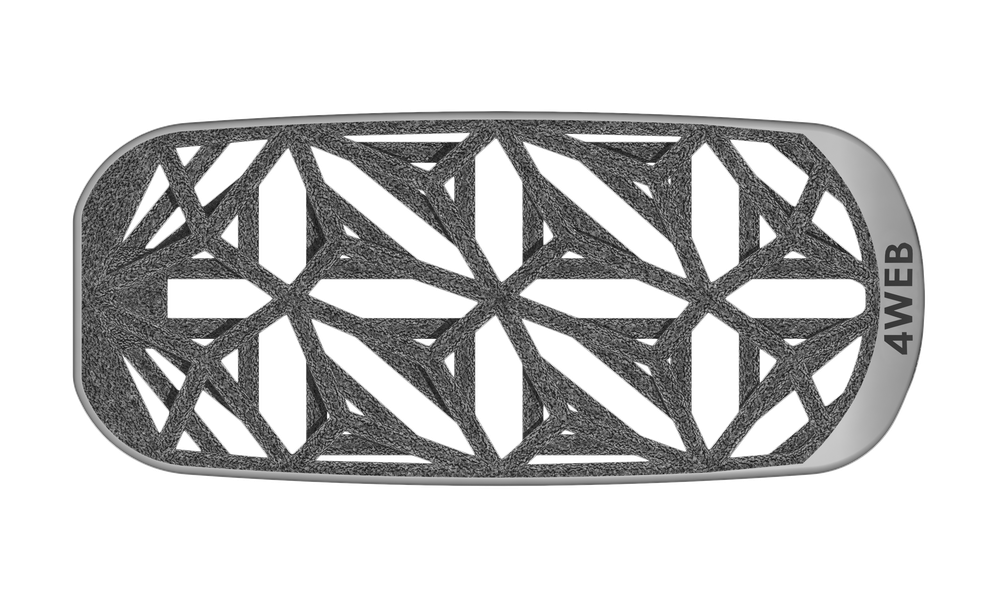
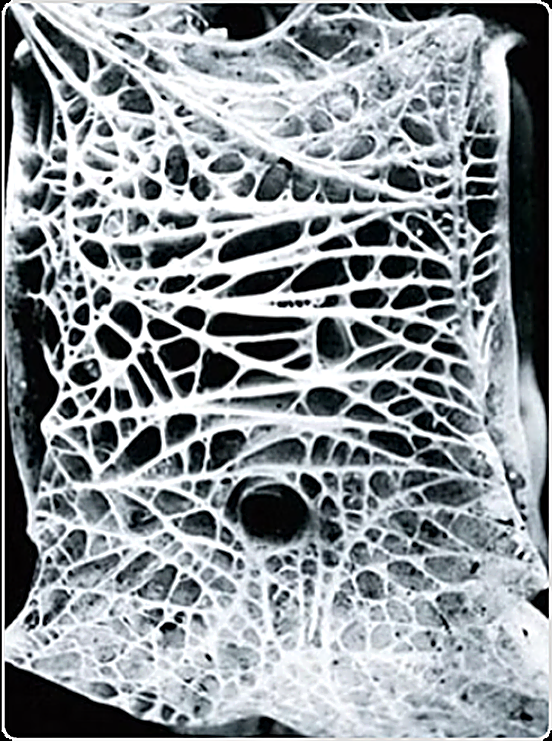
Here’s why that matters. Bone responds to pressure. The right amount signals your body to build new bone. Too little, and bone weakens. Too much, and it can damage tissue instead of helping it.
Our implant’s open structure — a truss — is engineered to create exactly that balance at your surgical site. It’s not a solid block standing in the way of healing. It’s a framework designed to carry the load of your spine while still letting your bone grow through it, continuously supporting fusion as it happens.
Our implant is Therapeutic by Design™
The result is an implant that doesn’t just hold your spine in place. It’s built to actively support your body’s healing, from surgery through fusion.
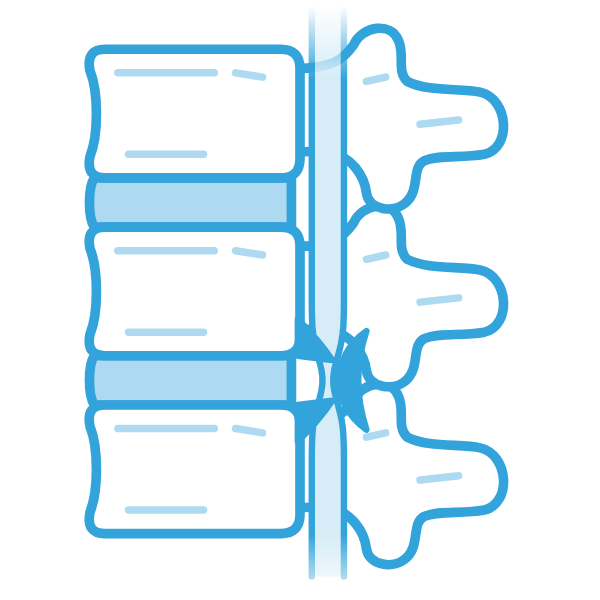
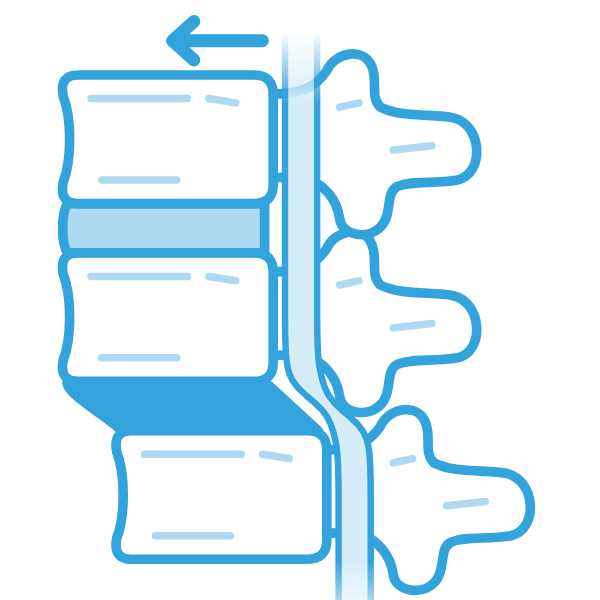

Physician Prescribed Procedures
Select a procedure below to learn more
Anterior Cervical Discectomy & Fusion
Is an ACDF Right for Me?
Your spine surgeon may determine an ACDF procedure is a good option if you:
- — Are skeletally mature with symptomatic neural compression at one or more levels from C2-T1
- — Received 3-6 months of non-operative treatment
What is ACDF?
Anterior Cervical Discectomy & Fusion (ACDF) is a procedure used to treat problems associated with DDD such as spine instability and deformities.
In this procedure, the surgeon works on the spine from the front (anterior) and removes a spinal disc in the cervical spine. An interbody fusion implant with bone graft is inserted into the space between the two vertebrae where the disc was removed and supporting fixation is added (screws, plates, etc.).
The goal of the procedure is to stimulate the vertebrae to grow together into one solid bone, a process known as fusion. Fusion creates a rigid and immovable column of bone in the problem section of the spine. Possible benefits include:
- — Pain relief
- — Stability
- — Return to activities
What to Expect: Minimally Invasive Surgery
Before
- 1
Your physician will evaluate your condition and consider all treatment options.
- 2
If surgery is the best option, your spine surgeon will discuss adverse events, risks, pre, and post-operative procedures.
- 3
Once admitted to the hospital, you will be taken to a pre-op room and prepared for surgery (put to sleep, etc).
During
- 1
An x-ray is taken of your spine to identify the location of the operative disc space.
- 2
Through a small incision, the cervical spine will be accessible from the front.
- 3
Disc removal will take place followed by insertion of a structural cage (interbody fusion device) packed with bone graft.
- 4
To further stabilize the spine and implant while fusion occurs, screws and/or plates may be utilized as necessary.
- 5
Your surgeon closes the incision and moves you into recovery.
After
Your physician will determine post-operative procedures and safety guidelines to follow at home.
Adverse Events & Risks
All surgeries present risks and complications that are important to discuss with your physician prior to your surgery. Listening to your physician’s guidance both before and after surgery will help ensure the best possible outcome from your procedure.
Specific adverse events associated with the spinal implant procedure include, but are not limited to:
- — Failure to fuse (Pseudarthrosis)
- — Interbody device or hardware malfunctions
- — Damage to the structures of the neck (nerves, vessels, trachea, esophagus, etc)
Please contact your physician to discuss all potential risks.
Anterior Lumbar Interbody Fusion
Is an ALIF Right for Me?
Your spine surgeon may determine an ALIF procedure is a good option if you:
- — Are skeletally mature with symptomatic neural compression at one or more levels of the spine
- — Received 3-6 months of non-operative treatment
What is ALIF?
Anterior Lumbar Interbody Fusion (ALIF) is a procedure used to treat problems associated with DDD such as spine instability and deformities.
In this procedure, the surgeon works on the spine from the front (anterior) and removes a spinal disc in the lumbar spine. An interbody fusion implant with bone graft is inserted into the space between the two vertebrae where the disc was removed and supporting fixation is added (screws, plates, etc.).
The goal of the procedure is to stimulate the vertebrae to grow together into one solid bone, a process known as fusion. Fusion creates a rigid and immovable column of bone in the problem section of the spine. Possible benefits include:
- — Pain relief
- — Stability
- — Return to activities
What to Expect: Surgery
Before
- 1
Your physician will evaluate your condition and consider all treatment options.
- 2
If surgery is the best option, your spine surgeon will discuss adverse events, risks, pre, and post-operative procedures.
- 3
Once admitted to the hospital, you will be taken to a pre-op room and prepared for surgery (put to sleep, etc).
During
- 1
An x-ray is taken of your spine to identify the location of the operative disc space.
- 2
Through a small incision, the lumbar spine will be accessible from your abdomen. The large blood vessels that lie in front of the spine are gently moved aside.
- 3
Disc removal will take place followed by insertion of a structural cage (interbody fusion device) packed with bone graft.
- 4
Screws may be placed through the cage to fixate it, or a plate and screws placed over the cage may be used.
- 5
Your surgeon closes the incision and moves you into recovery.
After
Your physician will determine post-operative procedures and safety guidelines to follow at home.
Adverse Events & Risks
All surgeries present risks and complications that are important to discuss with your physician prior to your surgery. Listening to your physician’s guidance both before and after surgery will help ensure the best possible outcome from your procedure.
Specific adverse events associated with the spinal implant procedure include, but are not limited to:
- — Failure to fuse (Pseudarthrosis)
- — Interbody device or hardware malfunctions
- — Damage to the structures of the spine (nerves, vessels, muscles, abdominal contents, etc)
Please contact your physician to discuss all potential risks.
Lateral Lumbar Interbody Fusion
Is an LLIF Right for Me?
Your spine surgeon may determine an LLIF procedure is a good option if you:
- — Are skeletally mature with symptomatic neural compression at one or more levels of the spine
- — Received 3-6 months of non-operative treatment
What is LLIF?
Lateral Lumbar Interbody Fusion (LLIF) is a procedure used to treat problems associated with DDD such as spine instability and deformities.
In this procedure, the surgeon works on the spine from the side (lateral) and removes a spinal disc in the lumbar spine. An interbody fusion implant with bone graft is inserted into the space between the two vertebrae where the disc was removed and supporting fixation is added (screws, plates, etc.).
The goal of the procedure is to stimulate the vertebrae to grow together into one solid bone, a process known as fusion. Fusion creates a rigid and immovable column of bone in the problem section of the spine. Possible benefits include:
- — Pain relief
- — Stability
- — Return to activities
What to Expect: Minimally Invasive Surgery
Before
- 1
Your physician will evaluate your condition and consider all treatment options.
- 2
If surgery is the best option, your spine surgeon will discuss adverse events, risks, pre, and post-operative procedures.
- 3
Once admitted to the hospital, you will be taken to a pre-op room and prepared for surgery (put to sleep, etc).
During
- 1
An x-ray is taken of your spine to identify the location of the operative disc space.
- 2
Through a small incision, the lumbar spine will be accessible from your side.
- 3
Disc removal will take place followed by insertion of a structural cage (interbody fusion device) packed with bone graft.
- 4
Screws may be placed through the cage to fixate it, or a plate and screws may be placed over the cage.
- 5
Your surgeon closes the incision and moves you into recovery.
After
Your physician will determine post-operative procedures and safety guidelines to follow at home.
Adverse Events & Risks
All surgeries present risks and complications that are important to discuss with your physician prior to your surgery. Listening to your physician’s guidance both before and after surgery will help ensure the best possible outcome from your procedure.
Specific adverse events associated with the spinal implant procedure include, but are not limited to:
- — Failure to fuse (Pseudarthrosis)
- — Interbody device or hardware malfunctions
- — Damage to the structures of the spine (nerves, vessels, muscles, abdominal contents, etc)
Please contact your physician to discuss all potential risks.
Posterior Lumbar Interbody Fusion
Is a PLIF Right for Me?
Your spine surgeon may determine a PLIF procedure is a good option if you:
- — Are skeletally mature with symptomatic neural compression at one or more levels of the spine
- — Received 3-6 months of non-operative treatment
What is PLIF?
Posterior Lumbar Interbody Fusion (PLIF) is a procedure used to treat problems associated with DDD such as spine instability and deformities.
In this procedure, the surgeon works on the spine from the back (posterior) and removes a spinal disc in the lumbar spine. One or more interbody fusion implants with bone graft are inserted into the space between the two vertebrae where the disc was removed and supporting fixation is added (screws, plates, etc.).
The goal of the procedure is to stimulate the vertebrae to grow together into one solid bone, a process known as fusion. Fusion creates a rigid and immovable column of bone in the problem section of the spine. Possible benefits include:
- — Pain relief
- — Stability
- — Return to activities
What to Expect: Minimally Invasive Surgery
Before
- 1
Your physician will evaluate your condition and consider all treatment options.
- 2
If surgery is the best option, your spine surgeon will discuss adverse events, risks, pre, and post-operative procedures.
- 3
Once admitted to the hospital, you will be taken to a pre-op room and prepared for surgery (put to sleep, etc).
During
- 1
An x-ray is taken of your spine to identify the location of the operative disc space.
- 2
Through a small incision, the lumbar spine will be accessible from your back.
- 3
Disc removal will take place followed by insertion of one or more interbody fusion implants packed with bone graft.
- 4
Pedicle screws and rods are inserted into the vertebral body to stabilize the spine and implants while fusion occurs.
- 5
Your surgeon closes the incision and moves you into recovery.
After
Your physician will determine post-operative procedures and safety guidelines to follow at home.
Adverse Events & Risks
All surgeries present risks and complications that are important to discuss with your physician prior to your surgery. Listening to your physician’s guidance both before and after surgery will help ensure the best possible outcome from your procedure.
Specific adverse events associated with the spinal implant procedure include, but are not limited to:
- — Failure to fuse (Pseudarthrosis)
- — Interbody device or hardware malfunctions
- — Damage to the structures of the spine (nerves, vessels, muscles, abdominal contents, etc)
Please contact your physician to discuss all potential risks.
Transforaminal Lumbar Interbody Fusion
Is a TLIF Right for Me?
Your spine surgeon may determine a TLIF procedure is a good option if you:
- — Are skeletally mature with symptomatic neural compression at one or more levels of the spine
- — Received 3-6 months of non-operative treatment
What is TLIF?
Transforaminal Lumbar Interbody Fusion (TLIF) is a procedure used to treat problems associated with DDD such as spine instability and deformities.
In this procedure, the surgeon works on the spine from the back (posterior) and removes a spinal disc in the lumbar spine. One or more interbody fusion implants with bone graft are inserted into the space between the two vertebrae where the disc was removed and supporting fixation is added (screws, plates, etc.).
The goal of the procedure is to stimulate the vertebrae to grow together into one solid bone, a process known as fusion. Fusion creates a rigid and immovable column of bone in the problem section of the spine. Possible benefits include:
- — Pain relief
- — Stability
- — Return to activities
What to Expect: Minimally Invasive Surgery
Before
- 1
Your physician will evaluate your condition and consider all treatment options.
- 2
If surgery is the best option, your spine surgeon will discuss adverse events, risks, pre, and post-operative procedures.
- 3
Once admitted to the hospital, you will be taken to a pre-op room and prepared for surgery (put to sleep, etc).
During
- 1
An x-ray is taken of your spine to identify the location of the operative disc space.
- 2
Through a small incision, the lumbar spine will be accessible from your back.
- 3
Disc removal will take place followed by insertion of one or more interbody fusion implants packed with bone graft.
- 4
Pedicle screws and rods are inserted into the vertebral body to stabilize the spine and implants while fusion occurs.
- 5
Your surgeon closes the incision and moves you into recovery.
After
Your physician will determine post-operative procedures and safety guidelines to follow at home.
Adverse Events & Risks
All surgeries present risks and complications that are important to discuss with your physician prior to your surgery. Listening to your physician’s guidance both before and after surgery will help ensure the best possible outcome from your procedure.
Specific adverse events associated with the spinal implant procedure include, but are not limited to:
- — Failure to fuse (Pseudarthrosis)
- — Interbody device or hardware malfunctions
- — Damage to the structures of the spine (nerves, vessels, muscles, abdominal contents, etc)
Please contact your physician to discuss all potential risks.
SI Fusion
Content coming soon.
Patient Info
Review our patient information and brochures to help prepare for your next conversation with your doctor.
Get in Touch
How can we help?
Fill out the form and our team will be happy to help.