A Pioneer in the Industry
Moving Beyond Surface Technology and Into Mechanobiology.
About Us
Thirty years of research in topological dimension theory led to the discovery of a novel geometry, the 4WEB, that can be used as a building block to create high-strength, lightweight web structures. The company leveraged this breakthrough to develop 4WEB’s proprietary truss implant platform which was the first 510(k) cleared implant manufactured with 3D printing technology.
4WEB is actively developing truss implant designs for tumor, trauma, and patient-specific applications.
0+
Devices Implanted
0+
Surgeon Users Worldwide
0+
Patients Treated Worldwide
Mechanobiology
Mech•an•o•bi•ol•o•gy (Noun)
An emerging field of science at the interface of biology and engineering that focuses on how physical forces and changes in the mechanical properties of cells and tissues contribute to cell differentiation, proliferation, and healing.
This proprietary Truss Implant Technology™ leverages a mechanobiological mechanism inherent to its truss design that may stimulate an osteogenic response to facilitate fusion1,2,3,9.

Novel Snowshoe Interface
The Snowshoe Interface distributes load across the bone contact surface, reducing the risk of subsidence4,5,6,7,8.

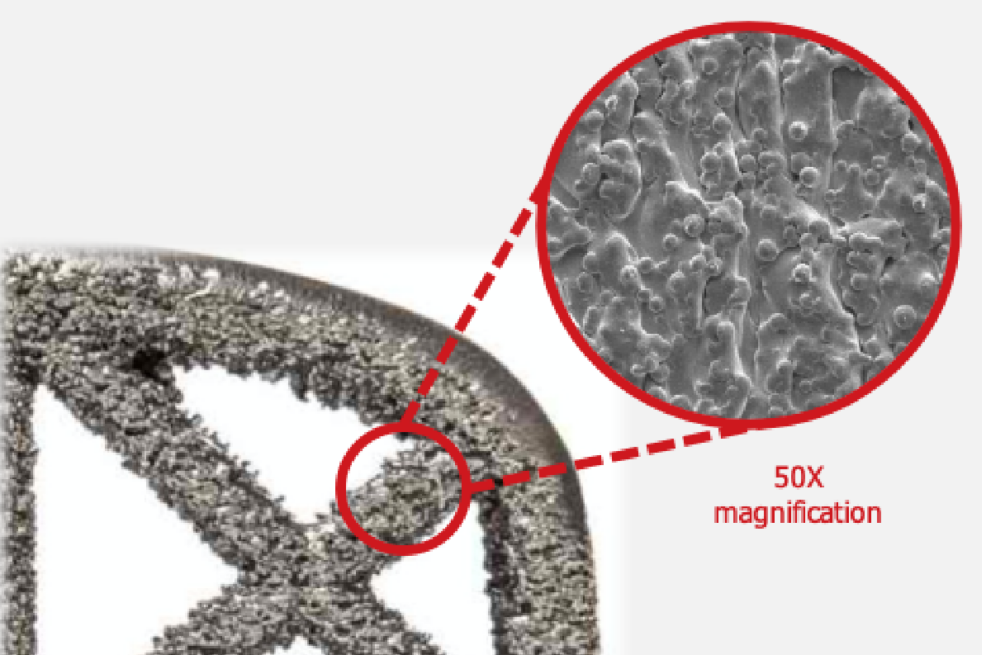
Hierarchical Surface Roughness
Macro to nano-scale surface features stimulate gene expression and cell differentiation, initiating osteogenic activity3.

Open Architecture Design
Open Architecture Design allows for greater graft volume and bone growth throughout the implant compared to annular designs.

Advanced Structural Design
Advanced Structural Design converts load into therapeutic strain, amplifying osteogenic activity at the surgical site1,2,10.
4WEB’s hierarchical surface roughness has been shown to provide an environment that allows for bone growth and fusion3. Under normal physiologic loading conditions, the truss implant distributes strain through the struts to adjacent cellular material, amplifying the osteogenic activity initiated by the implant surface technology.
Additionally, in vitro testing has also shown that stem cells cultured in an osteogenic medium demonstrate increased expression of certain osteogenic markers on 4WEB’s titanium hierarchical surface roughness compared to smooth titanium and smooth PEEK3.
Please note that in vitro and in vivo testing may not be indicative of clinical performance.